
Logistics, Shipping, and Documentation

Direct Sourcing and Its Impact on Price Stability

Supply disruptions are no longer exceptional events. Globalized supply chains, geopolitical tensions, climate-related disruptions, and logistical bottlenecks have made uncertainty a permanent feature of international trade. For companies that rely on industrial metals, these disruptions often lead to shortages, cost pressure, and difficult pricing decisions.
In this environment, sourcing strategy plays a critical role in price stability.
Why Sourcing Decisions Matter More Than Ever
When supply is disrupted, the immediate impact is often a shortage of material. Shortages push costs higher, reduce flexibility, and force companies to make quick decisions — sometimes at unfavorable prices. In competitive markets, this pressure becomes even more intense. Raising prices too much risks losing customers, while absorbing higher costs erodes margins.
This is why sourcing is no longer just a procurement issue. It directly affects pricing behavior and long-term competitiveness.
Cost Suppliers vs. Stable Suppliers
In practice, buyers often face a trade-off between two types of suppliers:

  • Cost suppliers, typically offering lower prices but higher exposure to disruption
  • Stable suppliers, usually more expensive but closer to end markets and more reliable

Relying only on low-cost sources can reduce procurement costs in the short term, but it increases vulnerability when disruptions occur. On the other hand, sourcing exclusively from stable suppliers improves reliability but can limit cost competitiveness.
Direct sourcing allows companies to manage this balance more deliberately.
Single Sourcing or Dual Sourcing?
Many firms prefer single sourcing because it simplifies supplier management and strengthens long-term relationships. However, this approach concentrates risk. A single disruption can stop supply entirely.
Dual sourcing introduces flexibility. By allocating volumes between cost-efficient and stable suppliers, companies can reduce exposure to disruption while maintaining competitive pricing. The right balance depends on market conditions, cost differences, and the firm’s tolerance for risk.
In volatile markets, flexibility often matters more than lowest cost.
The Role of Contracts and Penalties
Contract structures also influence sourcing behavior. Liquidated damages, for example, can partially offset losses caused by delayed or failed deliveries. However, they rarely compensate for lost sales, production downtime, or reputational damage.
When disruption risk is high, companies tend to prioritize supply continuity over contractual compensation. Price stability is easier to protect when material keeps moving, even if procurement costs are slightly higher.
Pricing Under Disruption
Supply disruptions often force price adjustments. When material availability drops, prices tend to rise. But aggressive price increases can quickly backfire in competitive markets, allowing competitors with stable supply to capture market share.
This creates a delicate balance: pricing must reflect higher costs without undermining long-term customer relationships. Firms with diversified and direct sourcing options are better positioned to manage this balance.
Why Direct Sourcing Improves Price Stability
Direct sourcing gives buyers greater visibility into supply conditions, production capacity, and lead times. It reduces dependence on intermediaries and allows faster adjustments when conditions change.
More importantly, it increases control. Companies that source directly can respond to disruptions by reallocating volumes, adjusting logistics, or switching supply routes — actions that help stabilize costs and limit extreme price movements.
At Karen Metal, sourcing decisions are structured to support continuity and transparency, helping customers manage cost risk in volatile market conditions.
Final Thoughts
Price stability in industrial metals is closely tied to sourcing strategy. While no approach can eliminate disruption risk entirely, direct and flexible sourcing models provide better tools to manage uncertainty. In competitive markets, the ability to balance cost efficiency with supply reliability is often what separates short-term gains from long-term stability.

Counterparty and Payment Risk

Price Volatility in Industrial Metals: What Buyers Should Know

For companies that use metals as raw materials, price volatility is rarely desirable. Fluctuating metal prices often translate directly into unstable material costs, making it harder to protect margins and plan production. Over time, this uncertainty can also influence material selection decisions and limit operational flexibility.
As a result, industrial buyers have a strong incentive to understand how metal prices behave and to manage — or at least control — their exposure to price volatility.
Price as a Signal, Not the Whole Picture
Metal prices are often viewed as a signal of scarcity. When supply tightens or demand increases, prices respond quickly. However, price alone does not fully explain future market behavior.
In practice, buyers and traders look at a broader set of indicators, including production costs, supply chain capacity, recycling efficiency, and the ability of the market to respond to demand changes. The difficulty is that these indicators do not always move prices in a consistent or predictable way.
What Actually Correlates with Price Changes
Research into metal supply chains shows that some commonly discussed scarcity-related indicators have only a weak connection to future primary metal prices. Factors such as raw material input costs, marginal production costs, recycling efficiency, and long-term depletion measures may influence prices, but usually not in a direct or linear manner.
Other indicators — including overall recycling rates, mining concentration, and short-term changes in mining output — often show little clear correlation with future price levels on their own.
In simple terms, no single metric reliably explains price volatility across different market conditions.
Insights from Market Research
These observations are also reflected in market and supply chain studies published by institutions such as the Massachusetts Institute of Technology (MIT). Research suggests that the strength of the relationship between scarcity indicators and metal prices depends heavily on market structure, demand elasticity, and how quickly new supply can be introduced.
Price behavior tends to become more responsive when markets are flexible, while rigid supply conditions often amplify volatility.
The Role of Secondary Metal
One factor that consistently helps reduce price volatility is the ability to substitute secondary (recycled) metal for primary material. When secondary material can be used without technical limitations, buyers gain flexibility in sourcing and production.
Greater substitutability increases effective supply and reduces price pressure during tight market conditions, helping to smooth cost fluctuations over time.
Managing Volatility in Practice
Price volatility cannot be eliminated. However, buyers who understand the limits of price signals, monitor a wider range of market indicators, and maintain flexibility in sourcing and material use are better positioned to manage risk.
At Karen Metal, pricing and sourcing discussions are based on current market conditions, transparent structures, and practical supply considerations rather than assumptions about future prices.
Final Thoughts
Price volatility in industrial metals reflects a complex interaction between scarcity, market structure, and supply chain flexibility. While some indicators provide limited insight into future price movements, their usefulness depends strongly on market conditions. For industrial buyers, the most effective response is not prediction, but preparation and adaptability.

Source:
Market and supply chain research published by the Massachusetts Institute of Technology (MIT)

The Hardest Challenges in Global Metals Trading

The Hardest Challenges in Global Metals Trading

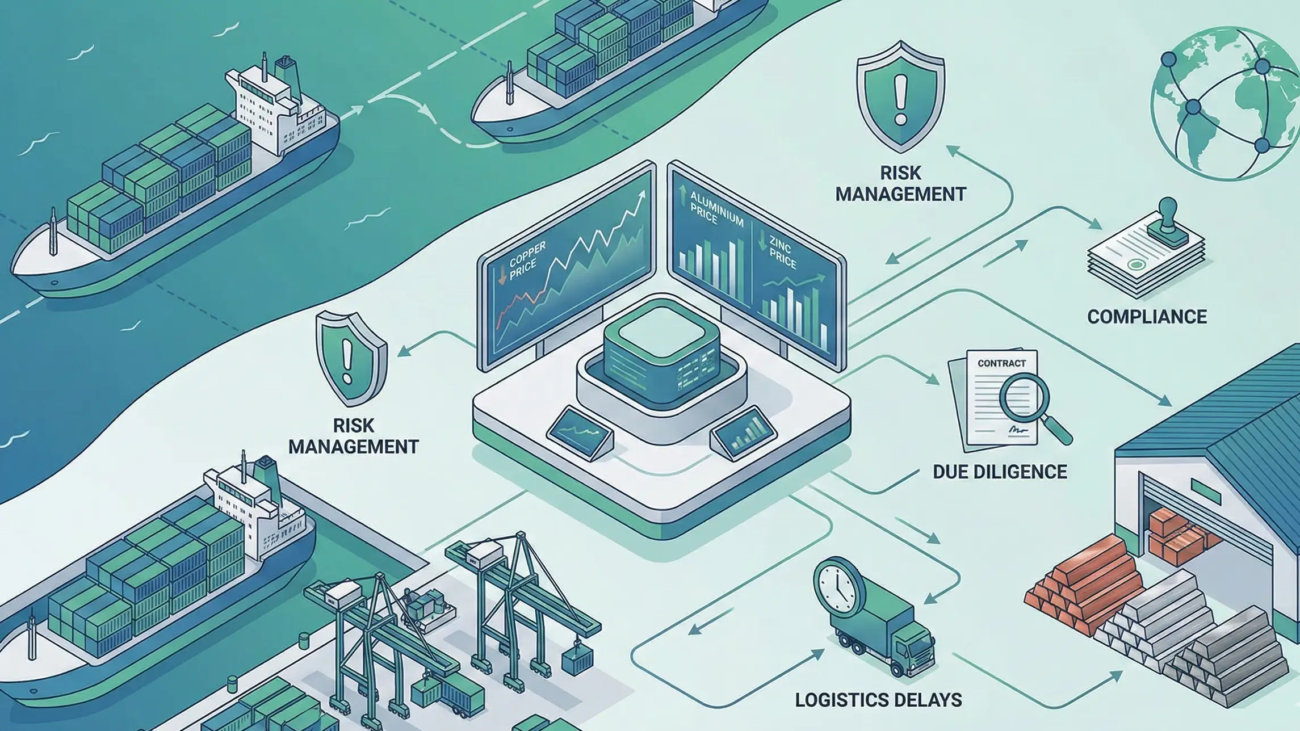
From the outside, global metals trading often looks simple. Buy aluminium, copper, zinc, or stainless steel at one price, sell it at another, and move on. Anyone who has worked in this industry knows that it rarely works that way.
Price movements are fast. Conditions change without warning. And decisions made in the morning can look very different by the end of the day.
Below are some of the challenges that professionals in global metals trading deal with on a regular basis.
Price Volatility and Timing
Metal prices can move sharply within a short period of time. Economic data, interest rate decisions, energy costs, geopolitical developments, supply disruptions, and currency fluctuations all influence the market.
Volatility creates opportunity, but it also increases risk. A trade that looks attractive at one moment can lose its margin quickly if timing is off.
In practice, experienced traders rely less on instinct and more on structure:

  • Following market movements throughout the day
  • Comparing futures prices with physical premiums and logistics costs
  • Working within clear internal risk limits

At Karen Metal, pricing decisions are based on market data and defined internal processes, not assumptions.
Supply Reliability
Reliable supply is another constant challenge. Production delays, transport issues, or regulatory changes can disrupt even well-planned transactions.
For this reason, professional traders focus on working with trusted producers and keeping sourcing flexible. Continuity matters more than short-term gains.
Logistics and Documentation
Global metal trade involves more than moving material from one country to another. Documentation accuracy, compliance requirements, and coordination between multiple parties play a critical role.
Small mistakes can lead to delays, additional costs, or operational friction. This is why experienced traders pay close attention to details that are often invisible from the outside.
Final Thoughts
Successful metals trading is not only about price. It depends on market awareness, risk discipline, reliable sourcing, and operational consistency. Companies that approach trading with structure and transparency are better positioned to build long-term relationships in global markets.